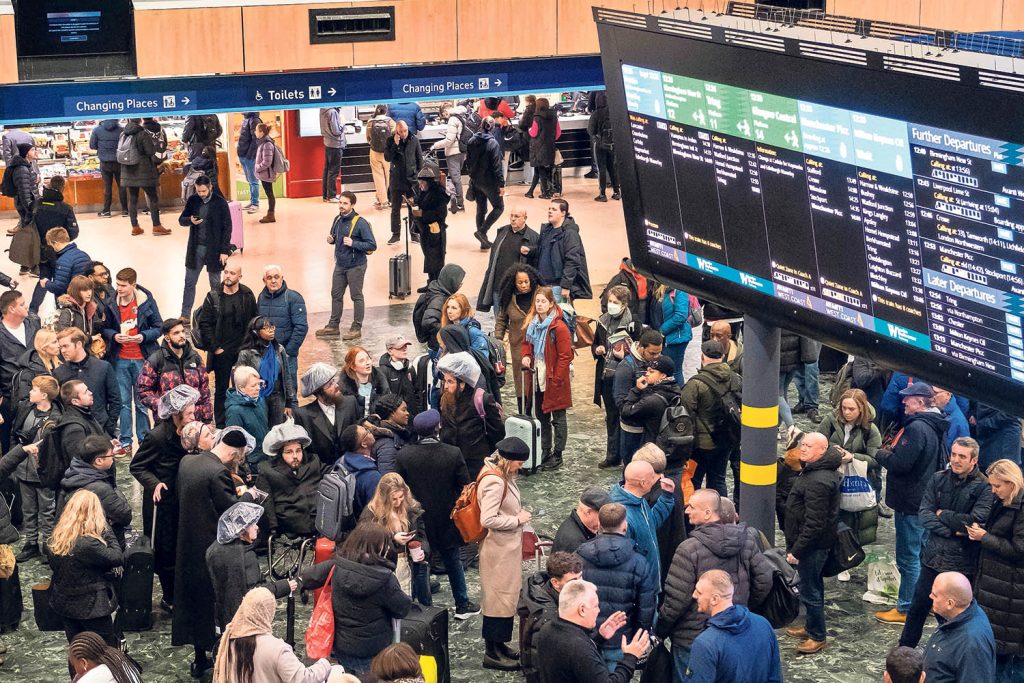
The British rail system, with its intricate web of lines, daily commuter surges, and regional disparities, has long been a symbol of both national connectivity and customer frustration. From delayed trains and confusing timetables to inconsistent station support, the experience of navigating the railways can be as stressful as it is essential. But as Artificial Intelligence (AI) continues its relentless advancement, a new era of customer service is arriving on the platform.
AI promises to transform how rail passengers engage with the system—not just by speeding up service or automating routine queries, but by fundamentally reimagining what customer service can be. This is not science fiction; it is an imminent reality. And for British rail, it might just be the innovation needed to meet modern expectations and rebuild public trust.
The Current Challenges in British Rail Customer Service
Before exploring the potential of AI, it’s worth outlining the issues that plague customer service in the UK’s rail system:
- Inconsistent communication during disruptions or delays
- Limited staffing at stations, especially in rural areas
- Long waiting times on customer helplines
- Confusing ticketing systems and journey planning tools
- Accessibility gaps for passengers with disabilities or language barriers
These challenges, layered over decades of underinvestment, privatisation complications, and infrastructure limitations, make the British railway ripe for technological transformation.
Enter AI: A Toolkit for Smarter Service
Artificial Intelligence isn’t a singular technology—it’s a toolkit of machine learning, natural language processing, predictive analytics, and automation. When applied strategically, AI can reshape how railway companies understand, engage with, and serve their passengers.
Here’s how.
1. Conversational AI: Smart Assistants on Every Platform
One of the most visible impacts of AI will be in the realm of customer interaction, particularly through AI-powered chatbots and voice assistants.
Rather than waiting on hold or trying to find a staff member at a station, passengers will be able to access 24/7 support through WhatsApp, mobile apps, websites, and even smart kiosks. These AI-driven assistants can handle:
- Real-time train running updates
- Refund and compensation requests
- Journey planning and platform information
- Lost property tracking
- Accessibility support for disabled passengers
Thanks to natural language processing (NLP), these bots will understand regional dialects, multiple languages, and even vague user queries—offering a far more human-like experience.
Imagine arriving at a station and simply saying to your phone, “Where’s the next train to Leeds? Is it delayed?” and getting an accurate, spoken reply instantly. No menus. No stress.
2. Predictive Maintenance and Disruption Management
Customer service doesn’t start with the complaint—it starts with the avoidance of disruption in the first place. AI’s predictive capabilities mean that trains, signals, and tracks can be monitored in real-time, identifying potential issues before they escalate into delays or breakdowns.
For passengers, this translates to:
- Fewer service disruptions
- More accurate forecasts of delay times
- Proactive alerts sent before arrival at the station
AI can also help operators reroute trains or dispatch replacement services more efficiently, ensuring minimal impact when problems do arise. This makes disruption management faster, smarter, and more transparent.
3. Hyper-Personalised Travel Information
AI enables a new level of personalisation. By learning from user behaviour, preferences, and historical journeys, AI systems can tailor travel information to each passenger.
For instance:
- Push notifications on your phone when your usual train is delayed
- Alternative route suggestions based on your location and mobility needs
- Integration with your calendar or smart home devices to anticipate travel patterns
This kind of proactive, context-aware customer service feels intuitive and human—but it’s powered by machine learning working quietly in the background.
4. Multimodal Journey Planning
AI allows passengers to navigate door-to-door journeys, not just train segments. As Britain increasingly focuses on integrated public transport, AI systems can combine data from:
- Trains
- Buses
- Trams
- Shared bikes and scooters
- Taxis and ride-sharing services
The result? A seamless journey planner that knows how to get you from your home to your destination using the best combination of services, including real-time traffic, delays, and even weather data.
This level of coordination not only improves convenience but encourages modal shift, helping reduce car dependency and emissions.
5. Voice AI for the Visually Impaired and Elderly
AI voice assistants are a game-changer for accessibility. For passengers who are blind, partially sighted, or elderly, navigating complex stations or reading digital displays can be daunting. AI can help by:
- Offering hands-free station navigation via voice commands
- Reading out platform numbers, train times, or delay notices
- Assisting in emergency communication at unstaffed stations
Voice-first interfaces empower passengers who may otherwise feel excluded from modern transport systems. This inclusive design approach ensures that AI works for everyone—not just digital natives.
6. Automated Complaint Resolution and Feedback Loops
One of the most frustrating parts of the rail experience is filing a complaint or claiming compensation. AI can simplify this by:
- Automatically detecting disrupted journeys via travel history
- Sending proactive refund alerts or claims forms
- Analysing passenger feedback to identify recurring issues
Machine learning systems can detect patterns—e.g., recurring complaints about a particular station’s lifts—and escalate issues internally, ensuring management is informed before they spiral.
7. Language Translation and Cultural Accessibility
As Britain becomes increasingly diverse and welcomes more international travellers, AI-driven real-time translation tools can make the railway experience more inclusive.
Smart screens and digital kiosks could offer support in dozens of languages, while voice bots could detect and respond appropriately to user language—breaking down communication barriers at the most crucial points of need.
Barriers and Concerns: Data, Trust, and Human Touch
While AI holds immense promise, its rollout across the British rail system must be carefully managed. Key concerns include:
- Data privacy: AI systems rely on personal data to function well. Rail operators will need robust frameworks for data security and consent.
- Job displacement: Staff unions have raised valid concerns about AI replacing human workers. The goal should be augmentation, not automation—using AI to free up staff for complex, empathetic tasks rather than eliminating jobs.
- Digital divide: Not all passengers have smartphones or feel comfortable using AI. Alternatives must remain available to avoid excluding vulnerable groups.
- Trust and transparency: AI systems must be explainable, fair, and unbiased. Passengers deserve to know how decisions are made and how their data is being used.
The Road Ahead: Building a Smarter, Kinder Railway
AI isn’t a silver bullet—but it is a powerful tool. The British rail system has long needed a leap forward in customer care, and AI provides the infrastructure for that leap. When implemented thoughtfully, AI can make the rail experience smoother, safer, and more human-centred—not less.
A future where passengers feel informed, respected, and empowered is within reach. It will require collaboration between technology providers, government bodies, train operating companies, and unions. But the track is laid. The signals are green.
All that remains is to get on board.
All aboard the future of customer service. The British railway is about to get a lot smarter—and a lot more human.
Fascinating read! It’s exciting to see how AI could genuinely improve the passenger experience on British railways—especially around real-time updates and accessibility. The idea of hyper-personalised journey planning feels like a huge leap forward. Let’s hope the rollout is as thoughtful as the vision!